Thursday, April 29, 2010

My New Favorite Veggie...Raw Corn!


The other day, my husband asked me to drop by Church's Chicken for some take-out. Yes, you heard right...my husband does not prescribe to my eating habits!

While I waited for his Fried Chicken, I checked out the menu board to see if there was anything I could possibly want myself. Hmmm, rice with veggies and chicken sounded OK and then, wow...they offered Corn on the Cob! So I ordered one!

When my order arrived, the corn was hot to the touch, and looked shiny and delicious, all wrapped up in a little bag of its own. I couldn't wait to get home to chow down!

Well, on first bite, the corn was a HUGE disappointment...soft and mushy with every bite, and slathered with some kind of grease...I'd like to hope it was butter, but I am highly doubtful.

I shared it with hubby, and he didn't like it much either...so into the compost the half-eaten cob went!

With my growing interest in all things raw, I asked myself if it was possible to retain that yummiest of corn flavors by eating my next corn on the cob raw. Off I went on a web search to see if others felt the same way. And alas, so they did!

I was able to buy 2 cobs for $1.49 on Fraser St at a little Asian market. At home, I started my salad fixings. I broke one cob in half and sheered the kernels off with a sharp knife. Then I added lettuce, cucumber, tomato, carrot, red cabbage, yellow pepper, and mushrooms, and a little dressing.

Heavenly! I am not kidding you! Right now, I cannot imagine another salad without raw corn in it!

As my 2-cob-supply was quickly dwindling, I headed out to Safeway to pick up a few more cobs. Well, much to my chagrin, they were charging $5.99 for 3 cobs...needless to say, I passed on that purchase...that was just too crazy expensive.

Tomorrow, I'll head back over to Fraser St...is it worth the drive? I think so...it's the principal here. While I'm at it, I'll check out Caper's too and, if they're charging a pretty penny for some organic corn, I might consider it...

Thursday, April 15, 2010

The Transition to High Raw...


As some of you may know, I am currently in the process of transitioning to a High Raw Diet. In the future, I may yet go completely Raw Vegan, but that is a future chapter of my life. For now, I'm in the research phase, and am tasting and testing a lot of different things, preparing my grocery list for a full switch on May 1st.

And by the way, I LOVE carbs and starches, anything baked, BBQ chicken, and a host of other staples in the Standard American Diet (SAD)...so this is a big step that's been on my mind and in my plans for a long time.

So, about sprouting, here's a little something about my experience so far...

I bought some seed packets, and decided to sprout my radish seeds first...the seeds are really small, they required lots of work, such as frequent rinsing and being careful not to lose them down the sink drain! But they worked over about 3 days, they were cute and tasty, and my $2.99 investment netted me about 2 tablespoons of radish sprouts...a very tasty (albeit expensive and time-consuming) addition to my salad yesterday!

Onto garden peas now, which I purchased at 2 for $1 at Wonderbucks. I'll keep you posted!

RESOURCES

FILMS:
The Future of Food
Food Inc.
Super-Size Me
Fast Food Nation

E-BOOKS:
www.renegadehealth.com/highraw

BOOKS:
The Omnivore's Dilemma

Tuesday, April 06, 2010

No Room for a Fresh Veggie Garden? Try Sprouting!


Why Sprouts? Because sprouts are:

Nutritious - seeds are packed with nutrients, and sprouted seeds are even better. As each sprout grows, proteins, enzymes, vitamins and other nutrients increase while becoming more bioavailable. At the same time, toxins and enzyme inhibitors are reduced, increasing digestibility.

Fresh - sprouts grown at home and harvested at the dinner table are the freshest food you’ll ever eat. They won’t have lost their vitamins, like store-bought vegetables, or have travelled around the world. They will be organically grown, full of life and energy.

Cheap - sprouting is ridiculously cheap! You can get pounds of greens for pennies.

Easy - it all boils down to "just add water." With few resources and very little time or effort, you can supply yourself with an abundance of live food, in your home, all year round. If you travel, they can too.

Varied - you can grow many more young plants than you would find in the store; your salads and recipes will always have something new...diversity is the spice of life!

So what exactly is Sprouting? It's the practice of soaking, draining and then rinsing seeds at regular intervals until they germinate, or sprout.

One of the most common sprouts is that of the mung bean (Vigna radiata); other common sprouts are chickpeas, alfalfa sprouts, and barley sprouts.

The good folks at RenegadeHealth.com have produced a 10-minute YouTube video to help you get started. It's called How to Sprout Buckwheat, Oats and Sunflower Seeds; Check out: http://www.youtube.com/watch?v=eqv65dhRgD4

Or do your own Google search and see what you come up with. Make this a new adventure for your kitchen, and for your diet!

Sunday, February 21, 2010

Think...and Grow Slim...in 90 Days!


In 1937, Napoleon Hill first published Think and Grow Rich, which was 25 years in the making. Since then, this marvelous little book has been read by countless thousands, many of whom claim that their personal and business success is the direct result of following Mr. Hill's template for achievement.

Here are the six steps, which you can find in full detail on Pg. 31:

1. Fix in your mind the exact goal you wish to accomplish.
2. Determine exactly what you are willing to give for this accomplishment (forget about something for nothing).
3. Establish a definite date when you intend for the goal to be accomplished.
4. Create a definite plan for the accomplishment of the goal, and begin at once (whether you are ready or not) to work your plan.
5. Write down a clear, concise statement of the goal, what you are willing to give, the exact date, and the plan.
6. Read your written statement aloud twice daily (immediately upon rising, and just before going to bed).

In November 2007, I competed in a Body Building competition. You can see some of my competition photos on my Facebook page. I owe my success as a competitor, and my personal success in my body transformation, to following the principles I've outlined above. I lost 20 pounds of body fat and, 15 days before my 50th birthday, I was in the best shape of my life!

If getting in shape and losing excess weight are your goals, please join me in my 90-Day Body Transformation Challenge. This is the right time of year to shed those unwanted winter pounds, and I have a proven plan to guide you with.

For your own copy of the downloadable e-book version of Think and Grow Rich, simply visit http://think-and-grow-rich-ebook.com.

For more information about the 90-Day Challenge, message me on Facebook, and let's get to work!

Friday, February 12, 2010

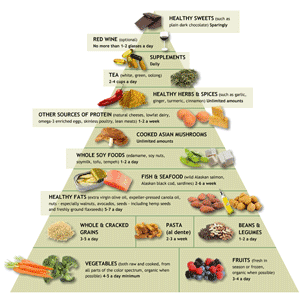
The Anti-Inflammatory Diet...by Dr. Weil


When my knee becomes tight and inflamed, of course I get worried. So I thought I'd take a few minutes and look up Dr. Weil's anti-inflammatory diet.

Fortunately, my diet is pretty clean but even I can use a little reminder now and again! And just in case you're not sure about your diet, take a few minutes to review the image above, and increase food choices that are less inflammatory.

From Dr. Weil's website: "It is becoming increasingly clear that a host of illnesses - including heart disease, many cancers and Alzheimer's disease - are influenced in large part by chronic inflammation.

This is a process in which the immune system becomes off balance, and persists unnecessarily in its efforts to repair the body and repel pathogens. The prolonged process results in damage to healthy tissue as well.

Stress, lack of exercise, genetic predisposition and other lifestyle factors can all promote inflammation, but poor diet is perhaps the main contributor, and the ideal place to begin addressing inflammation. (Find more details on the mechanics of the inflammation process and the Anti-Inflammatory Food Pyramid.)"

Sunday, February 07, 2010

Cleanse with West Coast Boot Camp


Spring is the perfect season to undertake a cleanse. There is much research that suggests that, during the winter months, while we are attracted to thicker, richer, "comfort" foods, we naturally put on some insulation for the cold weather. Even in Vancouver!

A cleanse, often referred to as a detox, requires a period of time, generally from 7 to 21 days, when you give your digestive system some needed rest. This is accomplished by choosing foods that require less work of your digestive system, and supplementing with herbs that support the liver and kidneys.

The West Coast Boot Camp is a 14 Day guided cleanse. It includes daily e-coaching, group exercise sessions (up to 14), all of your supplements, and meal planning.

Although I live in Vancouver, BC, Canada, you can join the guided cleanse from anywhere in North America, as long as you have access to a gym. Join us this Spring, as we undertake this cleanse together.

The cost is $200 (Visa and MC accepted), and there are a maximum of 10 spaces. E-mail Billie at bsinclaircoaching@hotmail.com to reserve your space.

Friday, January 22, 2010

How to Get Organized for a Fitness Lifestyle Upgrade!


First of all, you might be asking yourself, "What is a Fitness Lifestyle Upgrade?"...

Many people say they want to get fit, get healthier, eat better, stop smoking, lose weight, etc, etc, etc...

As I've told many of my students, everything we say we want is just a good idea, until we make it a goal, complete with an action plan. Use the SMART acronym to guide your action plan, when you're serious about making goals that you intend to achieve:

S - Specific
M - Measurable
A - Attainable
R - Realistic
T - Time Sensitive


So a Fitness Lifestyle Upgrade is what happens when you decide to take your health and wellness "good idea" and make it into a goal...

Specific: I will run the Sun Run on May 9, 2010
Measurable: I will follow the Training 16 workout program (for the next 16 weeks)
Attainable: I will check in with my doctor, and confirm that I am healthy enough to undertake this physical challenge
Realistic: I have looked at my schedule for the next 16 weeks, and I can and will devote up to one hour per day on improving my fitness level
Time Sensitive: I have plotted the 16 weeks on my calendar (up to May 9th)

Once we have set the goal, we have to Get Organized to support this Fitness Lifestyle Upgrade...this is the planning stage and here's what you have to think about and prepare:

* If the workout plan suggests 3 workouts of 40 minutes this week, which days can I do this? Post the three days on your weekly calendar.

* Do I have my equipment all ready (laundered, laid out)? Runners, socks, workout clothes (different options available for different types of weather, or different times of day), hair elastic, baseball cap, headphones and music, vest/jacket with many zippers, tissue, house key, gloves.

* Decide exactly what time of day works for your schedule and plan it. For example:

Morning workout: set your alarm...do you need 30 minutes to wake up and get dressed? 60 minutes? Go to bed on time the night before! Do you need 6 hours to feel fully rested? 8 hours? Always drink a glass of water as soon as you wake up.

After work workout: Can you walk in the door and get to your workout, without distractions from your family, TV, or the computer? Or should you workout straight from work?

Evening workout: Can you eat a light dinner and conserve your energy, so you can be assured of getting out of the house, before you head for your bed?

This is how you get organized for a Fitness Lifestyle Upgrade. It's no longer just a good idea to make improvements. You are TAKING ACTION by getting prepared, and setting up a system that will work for you. Then you simply take the steps!

This is how you make sure that there are NO EXCUSES and that..what you say...is what you do!

Happy Upgrade!

Saturday, January 16, 2010

Week One of Sixteen...Training to a 10K


  1. Always have medical clearance from your Health Practitioner before embarking on a new fitness regimen.
  2. Get the right running shoes for your foot type; this is crucial for comfort and injury prevention. Visit a running store to get expert advice on buying the right running shoe.
  3. Before you start your workout, always warm up properly...walk for 5-10 minutes at a brisk pace. You should always end your workout with a cool down, and a full body stretch routine.
Week 1 of 16

Walk for 6 minutes, then jog at an easy pace for 1 minute. Repeat three times. Your workout should take approximately 40 minutes, including warm up and cool down.

Aim for three sessions, with this sequence, during Week One.

For me it works best to decide, at the beginning of the week, which days I am going to work out. I create a workbook to keep track of my activity for the entire 16 weeks.

Tip: It is always best to do your three workout days, with an alternating rest day in between each. For example, Mon Wed Fri... or Tue Thur Sat...

Tip: What you eat is equally important for your success. Increase your choices of fresh, raw, live foods. Reduce your reliance on food in bags, bottles, boxes, or cans.

Happy Training!


Wednesday, January 13, 2010

Canadians On An Unhealthy Path


Canadians are rapidly catching up to our unhealthy neighbors South of the border.
According to the results of a recent study published in the Journal of the American Medical Association (JAMA), 19% of males and 21% of females (aged 20 - 39) in Canada are now classified as obese. This compares to our U.S. counterparts, with 34% of adults considered obese.
Back in 1981 when the research study began, Canadians were rather complacent about the direction of their health. What could have contributed to this physical weakening of the general population over the last 30 years?

Mark Tremblay, the project's lead researcher from the Children's Hospital of Eastern Ontario in Ottawa, has isolated some factors that may have contributed to our declining fitness levels:

* Increased screen time in front of TVs and computers at home and work,
* Our increased dependance on cars,

* The increased availability of convenience (processed and fast) foods, and

* Deterioration in the quality and quantity of physical education.

The fantastic thing about health is that the results are often a case of simple math...we are the sum total of what we eat, and what we do...x + y = z...

Eg. What We Eat + What We Do = Physical/Emotional Outcomes

Thus any desired change has a simple (not easy) solution...change one or more of the factors, and end up with a different result.

So based on Mr. Tremblay's factors, we must do the opposite.

* Spend less time in front of the computer and TV,

* Use other means of transportation sometimes, so that your body will have to move,

* Increase your consumption of real live raw foods (have I said this enough?), that is not in boxes, bags, packets, and cans...hmmm...could she mean vegetables and fruit?, and

* Increase your physical activity...get up a little earlier, put on the music, and crack a sweat before you get in the shower.

Don't make changes, just because it's the New Year...make life resolutions...getting older does not necessarily mean getting fatter and sicker. Resolve to do everything you can to be at your healthiest, regardless of the biological clock.

Implement change, starting today...remember, things can get better with age!


Monday, October 26, 2009

Preventing the Flu the "Natural" Way


Last Wednesday, Ottawa approved the H1N1 influenza vaccine. And on Saturday, U.S. President Barack Obama declared the swine flu outbreak a national emergency.
But is the influenza vaccine the only way to prevent the Swine (and other varieties of the) Flu?
As a Natural Nutritionist, I have been taught that it is absolutely vital to have a strong immune system, which will help fight off diseases, colds, and flu's. But what does that really mean? What exactly is the flu and how do we "catch" it? Or is there another explanation, is the body capable of cleansing itself, with an annual flu-type ritual?
I have heard people say, "I hate that I have the flu but I'm so glad I got sick...I really needed the break from work."
So then ‘catching the flu’ is a modern excuse to blame someone else for our suffering (we caught it off someone else) and quickly escape it and get back to our daily routine of work work work.
What is really happening is the body needs a break to rid itself of stress and accumulated toxins and it starts to cleanse itself. It is the body's own natural defense mechanism against toxic build-up. Taking over-the-counter medications merely slows down or stops the cleansing response.(http://www.detox.net.au/)
In our North American society, we work long hours; we sleep for short periods; we eat de-natured, packaged, high-fat, processed foods; we drink sugar-laden beverages to make it through the day. Do you suppose there's a connection between the way we treat our bodies, and the way our bodies treat us?
About ten years ago, I became ill with the "flu" twice within a few months. Both times, my body ached, my head hurt, my nose ran and, the final assault, after about a week of coughing, I lost my voice to laryngitis. During the second bout with the "flu", I decided I needed to make some lifestyle changes and began researching healthier living practices.
I have been cold- and flu-free for over 6 years now, and have been sharing my simple strategies through this blog, and by speaking to any audience that will listen!
Here are my favorite Do's and Don'ts for strengthening the Immune System, and living a healthy life:
  1. Eat live food at every meal. I eat fresh or frozen fruit at breakfast, and a variety of fresh vegetables throughout the day.
  2. Eat lettuce in at least one meal a day. I have a salad with every lunch and every dinner, 7 days a week.
  3. Cooked veggies are great, but they don't replace fresh live veggies. I eat baby carrots, snap peas, cut celery, cucumber slices, etc throughout the day.
  4. Drink water first thing in the morning. When I wake up, the first thing I put in my stomach is fresh water. When I'm hungry, I drink water first.
  5. Eat nuts in small quantities. I buy my nuts in the baking department or the health food store; not roasted and salted, but raw and unflavored. I mix nuts with dates or cranberries for added flavour.
  6. Limit junk foods. I gave up chips, cheezies, hot dogs, pastries, donuts, candy, and desserts. I eat limited amounts of muffins, breads, and buns. When socializing, I will agree to eating pizza with salad.
  7. Don't drink coffee when you should be eating something. Many people never feel their hunger because they drink so much coffee. Put off coffee, if you're not sure if you're eating enough live, fresh food.
  8. Pack your own lunches. Taking food with you when you leave the house allows you to make your own choices about what you'll eat during the day.
  9. When eating out, try replicating a good home-cooked meal. Restaurant meals are known to be high in fats and sugars; don't be tempted by too many nutrient-poor, high-calorie foods.
  10. Take good quality vitamins and minerals daily. I do this to cover all of my bases.

Well, these are my suggestions for boosting the immune system. Making the decision to have the flu shot or not is personal, and I don't make recommendations of that nature. But I do suggest that, as an individual, you need to start taking a more personal role in deciding who is in charge of your health...the food industry, the pharmaceutical companies, or you?


Monday, August 24, 2009

When Will We Finally Get the "Sugar Message"?


The American Heart Association (AMA) journal, Circulation, has reported online that North Americans are swallowing 22 teaspoons of sugar each day.

Most of this added sugar comes from soda pop and candy. In fact, there is so much pop sold today in this continent that we all drink, on average, 597 cans per year.

This Summer, McDonald's introduced their Any Size pop for $1. And, for the longest time, the size of the 7-Eleven's pops and slurpies have been growing to enormous proportions... the Big Gulp is 32 oz. of pop, and the Super Gulp is 64 oz. of pop...Slurpies range in size from 12 oz. to 40 oz.

Is all this pop necessary? Does pop even quench thirst? Or does it just delay thirst, and hunger?

Rachel K. Johnson, professor of nutrition at the University of Vermont in Burlington, lead author of the statement published online, says we need to "take a good hard look at our diet. Figure out where the sources of added sugars are and think about how to cut back on those items."

To check for added sugars, look for a variety of ingredients on labels, including sugar, corn syrup, fructose, dextrose, molasses or evaporated cane juice.

Remember that, on average, most women need about 1,800 calories a day and most men need about 2,200 calories to maintain their weight. And added sugar contributes no useful, nutritious calories...so, next time you're thirsty, drink a glass of water first.

Don't camouflage your hunger with a tasty soda...go get some real food!


Wednesday, June 24, 2009

What the Experts Say...Take Your Vitamins!


Joe Schwarz, the dirtector of McGill University's Office for Science and Society, recently wrote that "Most people are eating crap and thinking that they'll take a vitamin to equalize things. It's pointless. The problem with our diet is not a lack of vitamins. It's the fat, salt and sugar. Those issues are not addressed by taking more vitamins."
However, according to the World Health Organization, one-third of the world's population doesn't get enough micronutrients. And the deficiency is not just limited to developing nations.
A 2002 study found that 97% of Canadians are deficient in vitamin D through winter and spring, while University of Guelph researchers say 78% of Canadian children are low in omega-3 fatty acids. Many of us are also short on iron, calcium and - depending on whether you smoke, drink too much or are overweight - vitamins C and B as well.

"My view is that a supplement should never be taken as a silver bullet to replace a healthy diet or lack of exercise," says Brett Waslefsky, president of an Arizona-based company that makes supplements aimed at people in certain careers, such as nurses and teachers.
And Sherry Torkos, a Niagara-based pharmacist and author of The Canadian Encyclopedia of Natural Medicine (Wiley, 2008) said, "The truth is that most people are not getting nearly enough fruits and vegetables. Supplements can be used to complement a healthy diet and lifestyle to make up for things that cause deficiencies, like smoking, eating food with a lower nutritional value and drinking too much."
Every week, I promote adopting better eating habits, getting physically active, and supplementing with a select group of essential nutrients. My favorite supplements are still the BodyWise products, manufactured in California by Vita Tech International http://www.vitatech.com/ .
For the everyday needs of you and your family members, I recommend the AM (multi-vitamin), the PM (multi- mineral), and the Beta C (Vit C from mixed carotenoids).
For more specific health concerns, such as sports performance or sports-related injuries, send an e-mail to bsinclair@mybodywise.org and I will be happy to provide a nutritional consultation and supplement recommendation.

Sunday, June 07, 2009

Magnificent Mind - At Any Age...

According to Dr. Daniel G. Amen, author of Magnificent Mind at Any Age, most of us take our brains for granted.

But we can promote brain health by consuming the following foods:
  • lean protein, such as fish, chicken, and turkey
  • complex carbohydrates, that are low on the glycemic index, such as leafy greens
  • salmon, tuna, avocado, and walnuts (foods that contain Omega 3 fatty acids)
  • water, to avoid dehydration
  • blueberries
  • broccoli
  • oatmeal
  • oranges
  • red bell pepper
  • spinach
  • eat from the rainbow...foods of many colors provide the most anti-oxidants
  • fish oil supplements*
  • multi-vitamin/mineral formulations**

And it's probably not a coincidence that those lifestyle habits that protect the brain also contribute to the health of all our other organs!

* Super Omega $24 One Month Supply
** AM/PM $42 One Month Supply
Ask about purchasing these great products today from:
BODY BALANCE Smoothie & Snack Bar (778) 229-9271

Thursday, May 21, 2009

Eating Fruit on an Empty Stomach...Why?


It is commonly believed that the human stomach should be able to digest any number of different foods at the same time. However, digestion is governed by physiological chemistry. It is not what we eat that is crucial to our health, but what we digest and assimilate.

The principle behind food combining is that different food classes require different enzymes, different rates of digestion, and different digestive pHs for proper digestion. If the foods of the different food classes are combined incorrectly, the specific requirements for their proper digestion tend to cancel each other out.

For example, flesh foods require an acid media for digestion, whereas milk is highly alkaline, so it can neutralize the acid required for digesting the flesh foods.

Fruit digestion results in the release of an alkaline secretion, which neutralizes the acid secretions that are needed for protein digestion. Because of this, it is not a good idea to eat fruits and proteins at the same meals.

Some foods are digested faster than others. If fast-digesting foods, like fruits, are held up in the digestive system for a longer time than necessary through being combined with foods that digest more slowly, fermentation takes place. For this reason, you will experience better digestion when fruits and starches (which are digested slowly) are eaten at different meals.

Fruits and vegetables require different digestive enzymes, which tend to neutralize each other, so these too are best eaten at separate meals.

Friday, April 17, 2009

Swimming as a Work-Out Option


At last, warmer temperatures are greeting us as we step out of our homes…Spring is in the air! Most of us have a little winter baggage to shed, and bathing suit season, only 3 short months away, looms large in our minds.

Other signs of a West Coast Spring are all around us…fair weather runners are out in droves, with the Sun Run scheduled for April 19th. We breathe the warmer air in, stretch our limbs in every direction, and look forward to the freedom of our lighter wardrobes.

Did you know that regular swimming builds endurance, muscle strength and cardio-vascular fitness? It can serve as a cross-training element to your regular workouts. Before a land workout, you can use the pool for a warm-up session.

Swimming with increasing effort to gradually increase your heart rate and stimulate your muscle activity, is easily accomplished in the water. After a land workout, swimming a few laps can help you cool-down, move blood through your muscles to help them recover, and help you relax as you glide through the water.

Swimming burns calories at a rate of about 3 calories a mile per pound of bodyweight. If you weigh 150 lbs. and it takes you 30 minutes to swim one mile (1,760 yards or 1,609 meters), then you will be using about 900 calories in one hour.

Swimming is also an activity that the whole family can enjoy, so come down to MBody Fitness & Wellness Spa (in the Pacific Palisades Hotel) and splash into Spring in our beautiful 55’ warm-water lap pool! Or join us for an Aqua Fit class (call ahead for our current class schedule) and take advantage of the buoyancy that water has to offer, while getting a full body workout.

Not ready for the full dip but still want to shed the winter blahs? Drop in and use the Jacuzzi, steam room or, for a small additional charge, try a few sessions in our Infra-Red Sauna. The benefits of infra-red are many, such as detoxification, relieving aches and pains, and weight loss.

Even though our West Coast Winter was reasonably kind this year, plan now to enjoy Spring to the fullest!

Friday, April 03, 2009

Joint Health

Joint Health

Glucosamine Sulfate
Chondroitin Sulfate
Avocado/Soy Unsaponifiables (ASU)

These three natural ingredients are proven to provide unparalleled support for the health of joints and connective tissues.

Glucosamine and chondroitin both play a role in joint health by providing the raw materials the body uses to manufacture complex molecules called proteoglycans, which are the building blocks of joint tissue. Supplementing with glucosamine may help to rebuild cartilage and treat arthritis.

ASU is a unique ingredient, pioneered in France, which has been clinically shown to have remarkable benefits for joint health.

Potassium has been known to relieve the pain of arthritis.

Methylsulfonylmethane (MSM) provides sulfur, a vital building block of joints, cartilage, skin, hair and nails, and methyl groups, which support many vital biochemical processes in the body, including energy production.

MSM is a naturally-occurring nutrient found in small amounts in many foods. As a dietary supplement, MSM is synthesized. When made correctly, it is identical to that found in nature. MSM can be taken alone or in combination with other joint health nutrients, such as glucosamine and chondroitin.

Hyaluronic acid is a major constituent of cartilage, providing structure and holding water and nutrients.

Special herbal extracts, such as white willow bark and boswellia, help soothe joint tissue.

Recommended Daily Intake
While a recommended daily intake has not been established for Glucosamine Sulfate, most supplements contain a daily dose of 1500 mg.

Cost of our Joint Complete (from Body Wise International)
Available in a 90-count bottle: Take 3 tablets daily, which includes 175 mg Potassium, 1500mg Glucosamine Sulfate, 500 mg MSM, 300 mg ASU, 150 mg Chondroitin Sulfate, plus additional nutrients. $57.60 plus tax

Sunday, March 29, 2009

Weekly Nutrition Tip - Calcium

Calcium, the most abundant mineral in the human body, has several important functions. More than 99% of total body calcium is stored in the bones and teeth where it functions to support their structure. The remaining 1% is found throughout the body in blood, muscle, and the fluid between cells.

Calcium is needed for muscle contraction, blood vessel contraction and expansion, the secretion of hormones and enzymes, and sending messages through the nervous system. A constant level of calcium is maintained in body fluid and tissues so that these vital body processes function efficiently.

Bone undergoes continuous remodeling, with constant resorption (breakdown of bone) and deposition of calcium into newly deposited bone (bone formation). The balance between bone resorption and deposition changes as people age. During childhood there is a higher amount of bone formation and less breakdown.

In early and middle adulthood, these processes are relatively equal. In aging adults, particularly among postmenopausal men and women, bone breakdown exceeds its formation, resulting in bone loss, which increases the risk for osteoporosis (a disorder characterized by porous, weak bones).

Daily Intake

The recommended intake of Calcium for adults 19 - 50 yrs of age is 1000mg per day.
For adults 50+, it's 1200 mg per day.

Common Food Sources

Some common food sources of calcium are: yogurt, sardines, cheddar cheese, canned salmon, cottage cheese, and spinach.

Vitamin D

Vitamin D helps improve calcium absorption. Your body can obtain vitamin D from food and supplements, and it can also make vitamin D when your skin is exposed to sunlight. Thus, adequate vitamin D intake, both from foods and from sun exposure, is essential to bone health.

Cost for Billie's Essential Calcium (Body Wise International)

Available in a large bottle: 120 tablets (250mg tablets), take 4 tablets for 1000mg daily, includes 400 IU Vitamin D = $33 plus tax (wholesale) $33 plus tax.

Here's to strong bones and teeth...

Saturday, January 10, 2009

Get back on the horse...

The Holidays are behind us, and most of us are unhappy with the visible results of the last few months of excess! Now's the time to get back to our routines and schedules, especially the ones that help us with our health and wellness goals.

Since the winter began, I have hurt my knee 3 times. I'm still not walking or sleeping properly without pain so, needless to say, my fitness regimen is completely messed up. At a time like this, most people would simply give up on their goals and consider that they've had another failed attempt to lose weight or look better.

Rather than doing that, I have reduced my caloric intake by adding about 75% more fresh fruits and vegetables to my daily menu. While I know that my "fat loss program" is suffering because I can't do the cardio that I love and need, I also know that I'm doing all that I can do while I manage this setback.

I've had to forego the idea of competing in April but, if all goes well with the healing of my knee over the next few months, I will get back to the gym and into competition mode to prepare for November 2009.

I'm telling you this story to let you know that we all deal with life's curveballs; that the process of going after our goals is mostly about handling contingencies. Fitness goals are alot like relationships, "it's easy when it's easy". Real accomplishment happens in the face of challenge.

So, just in case you've given up on your self or your health and wellness goals, I'm here to tell you that you're exactly where you should be. And that every morning you have an opportunity to start fresh, to get back on the horse, and to keep moving forward.

I'm here to help you get back on that horse! All you have to do is believe in yourself one more time and reach out...

Wednesday, November 12, 2008

Sports Supplements Review - Part 9 of 9

Workout Formula

Workout Formula provides essential vitamins and nutrients, trace minerals, and key amino acids to support active involvement in sports and prolonged physical activity.

Also included:

*The branched-chain amino acids (BCAAs) leucine, isoleucine, and valine, which are considered essential amino acids because we couldn't survive without them.
* The amino acid glutamine, believed to play a role in several aspects of human physiology, including muscle and immune function
* Essential minerals, chromium, boron, and zinc
* Inlulin Analog, a complex carbohydrate which helps control blood sugar levels, reduces sugar cravings, and contributes to a consistent energy level, without sugar rushes and crashes
* Cytochrome C Oxidase, supplying a key enzyme in aerobic metabolism
* Ornithine alpha-ketoglutarate (OKG) which stimulates muscle growth and blocks the effects of catabolic hormones

Supporting healthy physical activity with a supplement like Workout Formula contributes to athletic performance, and overall health and well-being.

Friday, October 24, 2008

Sports Supplements Review - Part 8 of 9

Electro Aloe Hydration Crystals

Micronutrients and electrolytes are lost during intense exercise. Consuming a performance sports drink, like Electro Aloe, helps with energy levels and maintaining your electrolyte balance.

Electro Aloe supplies easily-absorbed carbohydrates , essential electrolytes, and trace minerals that are not found in plain water.

One serving of Electro Aloe contains 64% of the USDV for vitamin C, assists in the replenishment of fluids and electrolytes, and provides antioxidants.

Ornithine alpha-ketoglutarate (OKG) stimulates muscle growth and blocks the effects of catabolic hormones that break down muscle tissue.

Inulin Analog is the ultimate complex carbohydrate. It helps control blood sugar levels, reduces sugar cravings, and contributes to a consistent energy level, without sugar rushes and craches.

Add one scoop of Electro Aloe to 12 oz. of water to make one serving. Or dissolve the contents of one can in 2.5 gallons of water and make 27 servings for the team! You'll also enjoy the lemon-lime flavour!